BSL Power---POWER PRODUCTS SUPPLIER
CAN vs. RS-485 vs. Single-Wire Communication: Differences & Their Roles in Chargers
When it comes to chargers—whether for electric vehicles (EVs), industrial batteries, or small portable devices—reliable communication between the charger and connected systems (batteries, monitoring platforms, etc.) is non-negotiable. But not all communication protocols are created equal. In this post, we’ll break down three common options: CAN, RS-485, and single-wire (or “one-wire”) communication—explaining their key differences and how they’re used in charger applications.
12/27/20252 min read
CAN vs. RS-485 vs. Single-Wire Communication: Differences & Their Roles in Chargers
When it comes to chargers—whether for electric vehicles (EVs), industrial batteries, or small portable devices—reliable communication between the charger and connected systems (batteries, monitoring platforms, etc.) is non-negotiable. But not all communication protocols are created equal. In this post, we’ll break down three common options: CAN, RS-485, and single-wire (or “one-wire”) communication—explaining their key differences and how they’re used in charger applications.
What Are CAN, RS-485 & Single-Wire Communication?
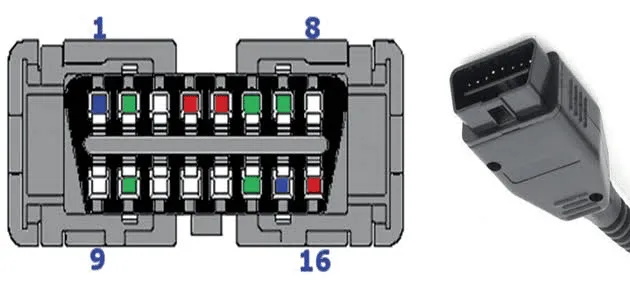
Let’s start with the basics of each protocol (using specs from the configuration image above as reference):
1. CAN Communication: High-Speed, Reliable for Real-Time Systems
What is CAN?
Controller Area Network (CAN) is a robust, real-time protocol defined by the ISO 11898 standard. It uses a differential two-wire setup (CAN_H + CAN_L) to resist electromagnetic interference (EMI)—critical for noisy environments.
Key Details:
Common baud rates (per the image): 500Kbps, 250Kbps, 125Kbps
Multi-node capacity: Up to 127 devices on one bus
Core traits: Real-time data transfer, built-in error detection, strong anti-interference
2. RS-485 Communication: Long-Distance, Cost-Effective for Clusters
What is RS-485?
RS-485 (EIA-485) is a widely used serial protocol optimized for long-distance, multi-device networks. It relies on a differential pair (A/B lines) for signal transmission.
Key Details:
Common baud rates (per the image): 115200bps, 9600bps, 4800bps
Transmission range: Up to 1200 meters (at lower baud rates)
Multi-node capacity: Up to 32 devices (more with repeaters)
Core traits: Extended reach, low cost, easy integration
3. Single-Wire Communication: Low-Cost, Simplified for Basic Needs
What is Single-Wire Communication?
Single-wire (or “one-wire”) is a stripped-down serial protocol that uses just one signal wire (plus a ground line) for data transfer. It’s designed for low-complexity, budget-focused scenarios.
Key Details:
Baud rate: Typically <100Kbps (slower than CAN/RS-485)
Transmission range: Short (usually <10 meters)
Core traits: Minimal wiring, ultra-low cost, limited speed/distance
How These Protocols Are Used in Chargers
Each protocol excels in specific charger applications:
CAN: For Electric Vehicle (EV) Chargers
EV chargers depend on CAN to communicate with the vehicle’s Battery Management System (BMS) in real time. Its 500Kbps baud rate and anti-interference design let the charger dynamically adjust charging current/voltage based on the battery’s state (e.g., SOC, temperature)—preventing overcharging and ensuring efficient, safe charging. This makes CAN the standard for EV-to-charger communication.
[Image Suggestion 4: EV charger connected to a car, with a callout highlighting the CAN bus link to the vehicle’s BMS]
RS-485: For Public Charging Station Clusters
For networks of public chargers (e.g., 10+ units at a parking lot), RS-485 connects all chargers to a central monitoring platform. Its 1200-meter range lets operators remotely collect data (charging time, energy usage), push firmware updates, or flag faults—all while keeping infrastructure costs low.
Single-Wire: For Small Portable Chargers
Budget-friendly portable chargers (e.g., for e-bikes or small lithium batteries) use single-wire communication for basic status feedback. For example, a charger might send a signal over one wire to indicate “charging complete” or “low input voltage”—no need for the speed/complexity of CAN/RS-485, just simple, low-cost wiring.
Final Thoughts
Choosing the right communication protocol for a charger boils down to your needs:
Need real-time, reliable EV charging? Pick CAN.
Need to monitor a cluster of chargers remotely? Go with RS-485.
Need a low-cost solution for basic portable chargers? Single-wire works.
Understanding these differences helps manufacturers, engineers, and buyers select the best setup for their application.
Need help picking a charger with the right communication protocol for your product? Reach out to our team for tailored recommendations!